Have you ever wondered how the softest pillows and plush toys are made with such precision? The secret lies in the technology behind filling machines and feather equipment.
This definitive buyer's guide explores the modern advancements in these essential tools for textile manufacturers in the United States. As the demand for high-quality home textiles, apparel, and furniture continues to rise, understanding the capabilities of these machines becomes crucial.
With precision levels reaching 0.1g, manufacturers can achieve consistent product quality. This guide will delve into the various options available, from semi-automatic to fully automatic systems, ensuring you find the right fit for your production needs.
Whether you are an entry-level buyer or a seasoned professional, this resource will help you navigate the complexities of modern filling technology, ensuring your operations are efficient and effective.
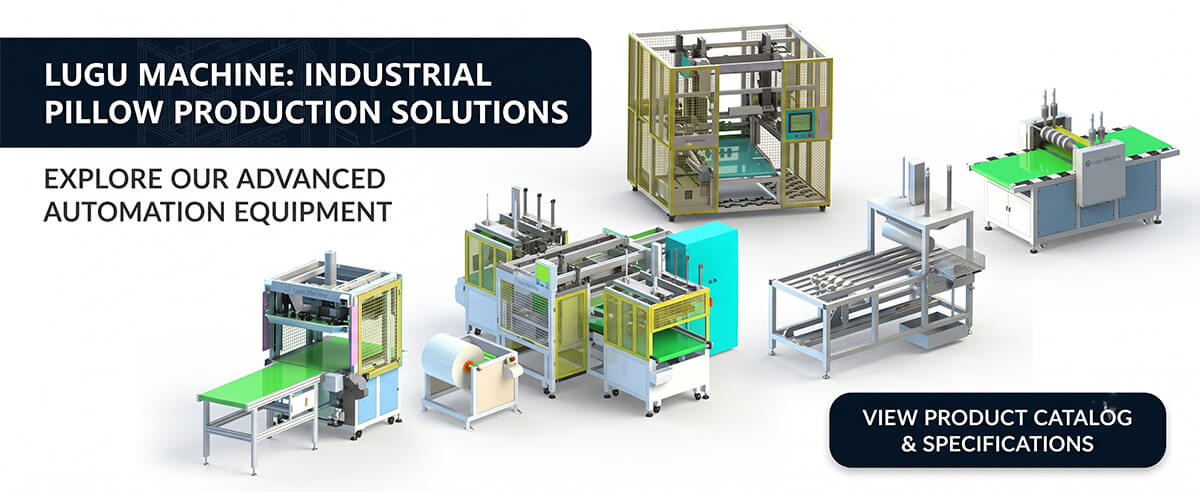
The precision of today's textile products relies heavily on cutting-edge machinery. These machines are essential in the manufacturing process, transforming loose materials into finished goods. Their role in the textile industry cannot be overstated, especially for products like pillows, cushions, and bedding.
Filling machines serve as a cornerstone for textile manufacturers aiming to produce high-quality home textiles. They efficiently manage the transformation of materials such as down, feathers, and synthetic fibers into beautifully crafted items. This process ensures that each product meets the standards expected by consumers.
Modern technology has significantly evolved from manual stuffing methods to advanced automated systems. These innovations enhance manufacturing efficiency, allowing companies to keep pace with growing market demands. Understanding the differences between machines designed for home textile applications and those meant for industrial use is crucial for manufacturers.
Home textile machinery, for instance, integrates seamlessly with other production equipment like quilting and carding machines. This integration provides a complete solution for manufacturers, enabling them to streamline their operations. Companies like Qinyuan (Jinying) Machinery have been at the forefront of this evolution, supplying reliable equipment to manufacturers across the globe.
As manufacturers explore the variety of available options, they can find machinery tailored to their specific needs. From versatile equipment that handles various material types to specialized machines for particular applications, the choices are vast. This section lays the groundwork for understanding how selecting the right equipment can directly influence product quality and production efficiency.
Understanding your production needs is the first step in choosing the appropriate machinery. This assessment helps define specific goals and efficiency requirements, ensuring that the selected equipment aligns with your operational demands.
Identifying production goals is crucial. Manufacturers should evaluate their current and projected output to determine if they need semi-automatic or fully automatic systems. A dual-head fully automatic polyester fiber filling machine can perform the work of 10 to 15 workers, drastically reducing labor costs while enhancing production efficiency.
Moreover, product quality is another significant factor. Automated filling processes deliver superior uniformity compared to manual methods. This leads to products that are evenly filled and plumper, providing a better tactile quality and consistency.
Compatibility with various materials is also essential. Buyers must analyze whether their machinery will handle goose down, polyester fiber, cotton, or multiple materials within the same production set. Understanding these factors will guide manufacturers in selecting the right machine for their specific applications.
To help streamline this decision-making process, consider the following key points:
By following these guidelines, manufacturers can create a comprehensive requirements document. This document will help streamline the supplier evaluation process and ensure that the selected equipment aligns with both current needs and future growth plans.
| Factor | Considerations |
| Production Volume | Assess current and future needs to choose between semi-automatic or fully automatic systems. |
| Product Quality | Automated filling offers superior uniformity compared to manual methods. |
| Material Compatibility | Ensure the machine can handle various materials like down and synthetic fibers. |
| Efficiency Metrics | Evaluate fill time per unit and daily output capacity for ROI calculations. |
| Waste Reduction | Precision filling minimizes material loss compared to manual stuffing. |
Today, the textile machinery sector in the U.S. is marked by innovation and increasing demand. This overview examines the current state of the market, highlighting key trends and major suppliers. The landscape includes both domestic manufacturers and international suppliers, making it a diverse and competitive environment.
One significant trend driving demand is the reshoring of manufacturing. Companies are increasingly seeking automated production solutions to address labor shortages. This shift has made the need for efficient and reliable machinery more critical than ever.
Key manufacturers like FOXSEW offer semi-automatic down and fiber filling machines, utilizing advanced technology from Germany. Meanwhile, Qinyuan Machinery exports to regions such as Europe, South America, Africa, and Southeast Asia. These suppliers are adapting their offerings to meet specific U.S. market requirements, including safety certifications and energy efficiency standards.
When evaluating suppliers, businesses must consider various factors. Import tariffs, shipping logistics, and the availability of local technical support services can significantly influence procurement decisions. Additionally, the demand for filling machine products spans multiple sectors, including bedding, apparel, furniture, and toy manufacturing.
As consumer preferences evolve, manufacturers are increasingly focused on sustainable materials and ethically sourced products. This trend is shaping how suppliers position their offerings in the market. Buyers can enhance their research by navigating supplier websites and utilizing cookies-enabled platforms for efficient product comparisons.
In the dynamic world of textile production, understanding the types of machinery available is essential for manufacturers. This section categorizes the primary types of equipment that can meet diverse production needs.
Semi-automatic systems, such as the FOXSEW FX-303H, offer versatility for various production requirements. These machines feature table sizes of 102x600x800 mm and can fill fibers ranging from 1-150g per cycle, while down filling can achieve 1-120g per cycle. With weights of 55/75 KGS, they are widely used in both pillow and garment manufacturing.
Fully automatic polyester fiber machines are designed for high throughput. These machines often have steel plate shells with spray-painted surfaces, stirring mechanisms, and small air storage tanks. They can be classified into single-head and dual-head models based on output ports. The dual-head configurations can replace 10 to 15 workers, dramatically increasing production efficiency.
Quilt and pillow filling machines cater specifically to bedding manufacturers. They ensure consistent fill distribution across large surface areas, crucial for maintaining product quality. Manufacturers often classify these machines by output port configuration, with single-head models suitable for smaller operations and dual-head systems meeting high demand production schedules.
Additionally, buyers should consider the distinction between mechanical and electronic valve footswitch mechanisms. Each type impacts operational precision and maintenance requirements. Machines that handle cotton and synthetic fibers often incorporate stirring and loosening mechanisms to break apart compressed materials, ensuring uniform filling results.
By understanding these categories, manufacturers can better match specific machine types to their product lines, whether producing down jackets that require precise feather filling or plush toys needing consistent fiber distribution.
The backbone of modern textile production lies in the advanced technology behind filling equipment. This section explores the core specifications that enhance the performance of these machines, focusing on precision, air pressure systems, and operational controls.
High-quality machines achieve remarkable precision, with capabilities of 0.1g. They can handle minimum charges of just 1g and maximum charges reaching 130g per cycle. This level of precision is crucial for maintaining consistent product quality across production runs.
Manufacturers can program these machines to meet various production needs, ensuring versatility in operations. This adaptability allows for efficient filling of different materials, whether fiber or cotton, without compromising quality.
Air pressure systems serve as the fundamental power source for these machines. Typically, they require air compressors with power ratings between 3-5.5 KW. The normal operating air pressure ranges from 5-7 Mpa, ensuring optimal propulsion of materials through filling tubes.
Machines are equipped with thickened air storage tanks. These tanks feature adjustable nozzles, allowing operators to fine-tune filling intensity based on the material type and product requirements.
Modern filling machines incorporate advanced operational controls. Movable electronic footswitches provide greater flexibility compared to traditional fixed switches. This innovation enhances the user experience, allowing for smoother operation during extended production shifts.
Furthermore, the filling nozzle is positioned at an ergonomic height of 650mm from the ground. This design consideration promotes operator comfort and efficiency, reducing fatigue during long hours of work.
Manufacturers also utilize durable steel plate shell construction, often spray-painted or plastic-coated, to withstand industrial environments. The integration of stirring mechanisms ensures that compressed materials are loosened, promoting uniform filling distribution.
| Feature | Specification |
| Precision | 0.1g with minimum charges of 1g and maximum of 130g |
| Air Pressure | 3-5.5 KW compressors operating at 5-7 Mpa |
| Storage Tanks | Thickened tanks with adjustable nozzles |
| Operational Speed | Low-speed operation at 40 RPM |
| Nozzle Height | Ergonomic height of 650mm |
The intricate mechanics behind filling machines play a vital role in modern textile production. Understanding how these machines operate is essential for achieving efficiency in textile manufacturing. This section delves into the operational mechanics that ensure high-quality output in various textile products.
The process begins with material intake, where a fiber suction machine loads various raw materials into the filling machine. These materials can include PP, PET, RPET cotton, pearl cotton, plastic pellets, or foam. Inside the machine, a stirring mechanism is employed to thoroughly mix these materials.
This mechanism uses a unique working principle that combines separation action from the cotton-extracting section and loosening action from the loosening section. This combination effectively breaks apart compressed cotton, goose down, and synthetic fibers, creating uniformly distributed filling material.
Once the materials are prepared, the air pressure filling process takes over. Compressed gas is forced through output ports, propelling the materials into pillow shells, jacket linings, and other textile products with consistent density. This method ensures that each product meets the desired quality standards.
Modern machines are equipped with internal air storage tanks that maintain consistent pressure throughout the filling cycle. This feature is crucial for uniform material distribution, which directly impacts the quality of the final product.
The operation of filling machines is significantly enhanced by the use of footswitch controls. When the footswitch is pressed, it activates the filling process, allowing operators to have precise command over fill timing. Electronic footswitches offer greater sensitivity compared to mechanical alternatives, providing better control over the operation.
Additionally, many modern machines feature monitoring displays that show real-time weight measurements. This allows operators to achieve target fill weights with precision before activating the pedal mechanism. The set of operational controls enables both experienced and novice operators to achieve consistent filling outcomes across extended production runs.
Understanding these principles empowers manufacturers to train staff effectively and troubleshoot common operational issues with their filling equipment.
| Process Step | Description |
| Material Intake | Raw materials are loaded into the machine using fiber suction equipment. |
| Stirring Mechanism | Materials are mixed using separation and loosening actions to break apart compressed fibers. |
| Air Pressure Filling | Compressed gas propels materials into product shells for consistent density. |
| Footswitch Operation | Electronic footswitches provide precise control over the filling process. |
| Monitoring Displays | Real-time weight measurements help achieve target fill weights accurately. |
The versatility of filling machines allows them to cater to a wide range of textile applications. These machines are integral to producing various items, from home textiles to outdoor apparel. Understanding their applications helps manufacturers optimize their production processes and enhance product quality.
In the home textile sector, filling machines are essential for manufacturing pillows, cushions, and bedding. They ensure consistent fill distribution, which is crucial for product comfort and longevity. Home textile manufacturers rely on these machines to produce everything from standard bed pillows to specialized mattress covers and sleeping bags with uniform material density.
Filling machines also play a significant role in the apparel industry, particularly in the production of down jackets. The precision of a feather filling machine ensures garments achieve proper insulation ratings without excess bulk or cold spots. This is vital for maintaining the performance and comfort of outerwear, especially in colder climates.
In plush toy manufacturing, fiber filling machines handle materials like PP cotton, shredded cotton, and foam particles. These machines create consistently stuffed products that meet safety standards, ensuring durability and comfort. Similarly, in the furniture industry, filling machines are used for sofa cushions and upholstery, where they must manage larger material volumes and denser packing requirements.
Modern filling machines are widely used across these diverse sectors because they effectively mix and distribute materials ranging from synthetic fibers to natural down feathers. Often, the same machine can serve multiple product lines with appropriate nozzle changes and setting adjustments, maximizing equipment utilization.
Additionally, cotton and fiber materials each require specific handling characteristics. Quality filling machines accommodate these needs through adjustable air pressure and stirring mechanisms. This comprehensive applications review helps manufacturers identify new product opportunities that their filling equipment investment can support.
| Application Area | Materials Used | Key Benefits |
| Pillows and Cushions | PP cotton, shredded cotton, down feathers | Consistent fill distribution for comfort |
| Down Jackets | Goose down, synthetic fibers | Proper insulation without bulk |
| Plush Toys | Foam particles, fiber cotton | Safety and durability standards met |
| Furniture | Cotton, synthetic materials | Larger volumes and denser packing |
The shift towards automation in textile production has transformed how manufacturers achieve efficiency. This section quantifies the performance and production efficiency benefits that justify investment in modern filling technology for textile manufacturers of all scales.
Automated systems dramatically reduce labor costs. A dual-head fully automatic polyester fiber filling machine can perform the work of 10 to 15 workers while maintaining or exceeding production output levels. This efficiency allows manufacturers to meet growing demand without proportional labor force expansion.
By utilizing advanced machinery, companies can cut down on labor expenses significantly. The investment in automation not only saves on salaries but also enhances overall productivity.
Machine-based operations complete pillow and product filling cycles in fractions of the time required for manual stuffing processes. Products filled with machines are evenly filled and plumper compared to those filled by hand, resulting in superior tactile quality and consistency.
Precision filling technology with 0.1g accuracy ensures optimal material utilization compared to the inherent inconsistencies of hand filling methods. Low-speed operation at 40 RPM avoids clumping of filling material, helping to save on raw materials and minimize waste.
Manufacturers learn how modern filling machines handle fiber, feather filling, and cotton materials with minimal loss during the transfer and filling process. This maximizes raw material value and enhances the quality of the final products.
Additionally, improvements in manufacturing efficiency extend beyond direct labor savings. They include reduced quality control requirements and fewer rejected products. Home textile and pillow manufacturers achieve faster production line speeds while maintaining fill consistency across thousands of units.
This benefits analysis provides the data-driven justification manufacturers need to present capital equipment investments to stakeholders and calculate realistic return on investment timelines.
The quality considerations in textile filling directly affect the comfort and marketability of finished goods. Selecting the right equipment is crucial for achieving the desired product quality. Machine-filled products offer a level of uniformity and tactile quality that manual processes simply cannot replicate.
Uniformity is a primary quality metric. Automated filling ensures even distribution, eliminating lumps and voids that can occur with hand-filled items. This consistency leads to products that not only look better but also feel better, enhancing consumer satisfaction.
Machine-filled pillows, cushions, and comforters deliver the plump, resilient feel that consumers expect from premium home textile products. The precision of filling technology, achieving 0.1g accuracy, ensures that each item meets exact specifications for weight and loft.
Material compatibility testing is essential. Filling machines must handle specific fiber types, including goose down and cotton blends, without damaging delicate materials. This capability preserves the insulating properties of these fibers, ensuring that products maintain their quality over time.
Moreover, different filling materials require specific machine configurations. Understanding these requirements helps manufacturers achieve optimal loft, recovery, and durability characteristics in their finished products.
Consistency across large batches is vital. Every product bearing a brand label should meet the same high standards, regardless of when or where it was manufactured. Quality filling equipment plays a key role in preserving the natural properties of premium materials, maximizing fill power and thermal efficiency.
In conclusion, investing in high-quality filling machines is fundamentally an investment in product excellence and long-term brand value. The correlation between machine quality and finished product excellence cannot be overstated.
| Quality Factor | Importance |
| Uniformity | Ensures even distribution and eliminates lumps. |
| Tactile Quality | Enhances consumer satisfaction with a plump feel. |
| Material Compatibility | Prevents damage to delicate fibers and maintains insulation. |
| Precision Filling | Achieves exact specifications for weight and loft. |
| Batch Consistency | Ensures all products meet high brand standards. |
Modern filling technology offers remarkable adaptability for various production needs. Manufacturers are increasingly seeking equipment that can handle multiple product lines and material types. This section explores the customization and flexibility features that make these machines essential investments.
Adjustable filling weight systems allow operators to program precise fill amounts. These machines can accommodate weights from as little as 1g to as much as 130g per cycle. This flexibility is crucial for producing everything from small plush toys to oversized pillows.
Removable filling tubes are available in various sizes, with diameters ranging from 50mm to 10mm. This feature enables manufacturers to switch between product types without investing in multiple dedicated machines. Interchangeable tube sets allow the same machine to handle delicate down feather filling for apparel one shift and dense cotton stuffing for furniture cushions the next.
These machines support both semi-automatic and fully automatic operation modes. This versatility gives manufacturers the ability to use manual control for specialty items while utilizing automated production for high-volume runs. Additionally, adjustable air pressure systems enable operators to fine-tune filling intensity based on material characteristics. This prevents damage to fragile fibers while ensuring complete cavity filling.
Customization options from manufacturers allow equipment to be tailored to specific production environments. This includes modifications for unique product dimensions or specialized material handling requirements. Precision weight control minimizes material waste, ensuring every product meets exact specifications regardless of operator experience level.
In summary, the flexible features of filling machines support the production of pillows, cushions, toys, and apparel on a single versatile platform. This adaptability maximizes return on investment by serving evolving production needs over the machine's operational lifetime.
When evaluating suppliers for textile equipment, it's essential to consider various credentials. A systematic approach can help manufacturers identify reliable partners that align with their production needs.
Warranty and After-Sales Support
Standard warranties typically cover one year for non-human damage factors. This coverage is crucial as it protects your investment in quality machinery. After-sales support is equally important. Suppliers should offer engineers who can provide on-site training and installation services. This ensures that your team is well-equipped to operate the machinery effectively.
Technical Training and Installation Services
Technical training is vital for maximizing the use of your new equipment. Suppliers that dispatch engineers for installation and training help streamline the transition to new technology. This support reduces downtime and enhances operational efficiency right from the start.
Global Export Experience and Market Reach
Consider the global export experience of potential suppliers. Established manufacturers with a track record of exporting to regions like Europe, South America, Africa, and Southeast Asia often demonstrate reliability. Their experience in diverse markets can be an indicator of their capability to meet your specific needs.
Quality control processes are also crucial. Professional engineers should inspect each machine part before shipment to ensure everything works properly. This step guarantees that your equipment arrives ready for immediate production deployment.
Furthermore, effective communication channels are essential. Suppliers should offer multiple contact methods, including TM, Skype, WhatsApp, Wechat, QQ, and Email. This facilitates ongoing technical support and spare parts ordering throughout the machine's operational life.
Secure payment options, such as Trade Assurance programs, protect transactions and provide dispute resolution mechanisms for international equipment purchases. By understanding these factors, manufacturers can select suppliers who will support their filling operations with responsive service and technical expertise.
A thorough analysis of pricing and investment considerations is vital for informed decision-making in textile production. Understanding the costs associated with machinery can help manufacturers justify their investments. This section provides realistic pricing expectations and frameworks for return on investment (ROI) calculations.
The pricing range for filling equipment varies significantly. Entry-level machines start around US$1,500.00, while advanced systems can reach US$5,000.00 or higher. The cost factors include:
Investing in modern filling technology can yield significant returns. A dual-head machine can replace 10 to 15 workers, leading to substantial labor cost reductions. Increased production speed allows manufacturers to fulfill larger orders, capturing additional revenue. Key considerations for ROI include:
This financial analysis empowers manufacturers to present compelling business cases to stakeholders. By understanding these factors, businesses can make informed decisions about their filling machine investments, aligning with operational budgets and growth strategies.
In the textile industry, understanding compliance and safety standards is crucial for operational success. Manufacturers must navigate a complex landscape of regulations that govern the selection and operation of machinery. This section explores the key industry standards and regulatory requirements that impact the operation of filling equipment.
Safety protocols are a primary concern. Machinery must adhere to strict guidelines for air pressure systems operating at 5-7 Mpa. Proper guarding of moving parts and emergency stop systems are essential to protect workers during machine operation. Additionally, safe operational procedures during material loading and maintenance help ensure consistent product quality output.
Operational protocols play a vital role in safeguarding employees. They outline safe practices during the use of equipment, ensuring that all safety measures are in place. Regular training sessions for staff on these protocols can further enhance workplace safety.
Environmental regulations also shape the design of textile machinery. Modern equipment often incorporates energy-efficient motors and optimized air compressor systems. These innovations not only reduce operational costs but also support sustainability initiatives within the industry.
Compliance with U.S. workplace safety regulations, such as OSHA standards, is another critical factor. These regulations address noise levels, dust control, and ergonomic design considerations, ensuring a safe working environment for operators.
Furthermore, quality control processes are integral to maintaining product standards. Each machine part must be verified for compliance before shipment. Professional engineers and inspectors are responsible for ensuring that equipment meets established manufacturing standards.
Buyers should also be aware of certification requirements that reputable manufacturers meet. This includes electrical safety standards and material compatibility testing for both feather filling and synthetic fiber applications. Proper material handling protocols are necessary to prevent cross-contamination and maintain product integrity.
To verify supplier compliance, manufacturers can request documentation, third-party certifications, and factory audit reports. This regulatory guidance is essential for selecting filling equipment that meets all applicable standards while protecting the workforce and ensuring consistent production of compliant finished products.
Efficiently merging new technology with existing textile production lines is essential for modern manufacturers. This integration process requires careful planning and consideration of various factors to ensure a smooth transition.
One critical aspect is the compatibility with other textile machinery. Filling equipment must seamlessly integrate with machines such as quilting, opening, carding, and wadding production lines. This compatibility forms a cohesive manufacturing workflow that enhances overall productivity.
Manufacturers should assess how new filling machines will work alongside their current equipment. Ensuring that the new machinery can communicate effectively with existing systems is vital. This can help prevent bottlenecks and maintain a steady flow of materials through the production process.
Another important consideration is the space and power requirements for the new equipment. Typical filling machines have dimensions of approximately 1200*650*740mm, with packing sizes around 1180x650x850mm. This necessitates careful planning of floor space to maintain efficient material flow between production stations.
Power requirements also play a significant role. Most machines require air compressor systems with capacities ranging from 3-5.5 KW. Manufacturers must ensure their facilities can accommodate these power needs without disrupting existing operations.
Weight specifications for semi-automatic models range from 55 to 75 KGS. This information influences decisions about installation locations and floor loading considerations. Proper planning helps prevent any operational issues related to weight distribution.
In conclusion, manufacturers can optimize their production line layouts by positioning filling stations strategically. This minimizes material transport between processing steps and enhances overall efficiency. Suppliers often provide installation guidance and technical support, ensuring that new equipment integrates seamlessly with existing textile machinery.
The future of filling technology is bright, with innovations paving the way for more efficient production. This section explores the advancements that are reshaping the capabilities of these essential machines in the textile industry.
Automation is at the forefront of these changes. Digital control systems allow operators to program and store filling recipes for various products. This capability significantly reduces changeover time between production runs, enhancing overall efficiency.
Today’s filling systems feature advanced digital controls that streamline operations. These systems enable precise programming of filling amounts, ensuring consistency across different product lines. This innovation is particularly beneficial for manufacturers looking to optimize their production processes.
Moreover, the integration of electronic valve systems is replacing traditional mechanical footswitches. This transition enhances reliability and control, allowing for programmable response curves. As a result, operators can achieve better performance and adaptability in their production environments.
In addition to automation, enhanced material handling systems are transforming how manufacturers manage their input materials. These systems automate the intake and conditioning of fibers, cotton, and feather filling materials, significantly reducing manual intervention.
By minimizing manual handling, manufacturers can lower labor costs and improve production efficiency. Advanced systems ensure that materials are prepared and fed into the filling machines seamlessly, enhancing the overall workflow.
Precision sensor technology is also advancing, with current systems achieving an impressive 0.1g accuracy. This level of precision ensures that products are filled consistently, meeting the highest quality standards.
Furthermore, innovations in low-speed operation technology are preventing fiber clumping while maximizing fill quality. This is essential for maintaining the integrity of the materials used in various applications, from plush toys to high-end bedding.
Manufacturers are increasingly responding to the demand for machines that can handle sustainable and recycled materials, including RPET fibers. This shift not only meets consumer preferences but also aligns with global sustainability goals.
As we look ahead, the production efficiency gains from these emerging technologies will continue to reduce per-unit manufacturing costs while improving product consistency. This analysis helps forward-thinking manufacturers understand the technology trajectory and make informed equipment investments that will keep them competitive as the industry evolves.
| Innovation | Description |
| Digital Control Systems | Allow programmable filling recipes for various products, reducing changeover time. |
| Electronic Valve Systems | Replace mechanical footswitches for improved reliability and control. |
| Automated Material Handling | Minimizes manual intervention, reducing labor costs and enhancing workflow. |
| Precision Sensors | Achieve 0.1g accuracy for consistent product filling. |
| Low-Speed Operation | Prevents fiber clumping while maximizing fill quality. |
Investing in the right equipment is essential for textile manufacturers aiming to enhance their production capabilities. The comprehensive evaluation of filling machines and feather technology shows that proper selection directly impacts product quality and efficiency.
Key takeaways include:
Buyers are encouraged to contact suppliers through available channels such as TM, Skype, WhatsApp, Wechat, QQ, and Email. This will facilitate discussions on specific requirements and allow for quotation requests. Leverage the frameworks presented in this guide to compare specifications and select equipment that meets your production needs.



Hello, I am the online customer service


